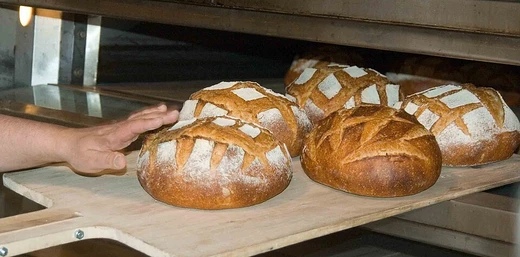
Sourdough
Ancient leavening agent using wild yeast and lactobacillus.
Sourdough is a leavening agent containing naturally occurring yeast and lactobacillus bacteria. It is used to describe bread baked with sourdough, while the sourdough itself is referred to as a starter. The fermentation process produces lactic acid, giving the bread its distinctive sour taste and improving its keeping qualities.
- field
- Food microbiology, breadmaking
- known_for
- Ancient leavening agent; basis of San Francisco sourdough; associated with Klondike gold prospectors
Lore & Background
Sourdough is one of the most ancient and popular forms of leavening bread. It was the standard method of breadmaking for most of human history until the Middle Ages, when it was replaced by barm. The Encyclopedia of Food Microbiology states that one of the oldest sourdough breads dates from 3700 BC and was excavated in Switzerland, but the origin likely relates to the origin of agriculture in the Fertile Crescent and Egypt several thousand years earlier. Pliny the Elder described several methods of sourdough leavening.
French bakers brought sourdough techniques to Northern California during the California Gold Rush, and it remains part of San Francisco culture. The strain of Lactobacillus in sourdough starters is named Fructilactobacillus sanfranciscensis, alongside the sourdough yeast Kasachstania humilis. The sourdough tradition was carried into Alaska and the Yukon Territory during the Klondike Gold Rush of 1898, where conventional leavenings were less reliable. Experienced miners carried a pouch of starter, fiercely guarded from freezing, though freezing does not kill a starter; excessive heat does. Old hands came to be called 'sourdoughs,' a term still applied to any Alaskan or Klondike old-timer.
In English-speaking countries, sourdough is no longer the standard method for bread leavening, having been replaced first by barm, then by cultured yeasts. It has undergone a revival among artisan bakers and in industrial bakeries. In countries with no legal definition of sourdough bread, some products marketed as such are leavened using baker's yeast or chemical raising agents; the term 'sourfaux' has been applied to such breads by the Real Bread Campaign.
Reader's Guide
Sourdough's significance lies in its role as one of the oldest and most widespread leavening methods in human history, predating commercial yeast by millennia. Its legacy is preserved in regional traditions such as San Francisco sourdough, which relies on specific microbial strains like Fructilactobacillus sanfranciscensis and Kasachstania humilis. The starter culture, a live mixture of flour and water containing wild yeast and lactobacilli, must be regularly refreshed with flour and water to remain active. The ratio of fermented starter to fresh flour and water, called the refreshment ratio, is critical for microbial stability. A drier, cooler starter produces more acetic acid and a sourer loaf, while a wetter, warmer starter yields more lactic acid. The sourdough tradition also became emblematic of the Klondike Gold Rush, where miners carried starter pouches and were nicknamed 'sourdoughs.' In modern times, sourdough has seen a revival among artisan bakers, though some commercial products labeled as sourdough may use baker's yeast or chemical leavening agents, a practice criticized by the Real Bread Campaign.
Did You Know?
- One of the oldest sourdough breads dates from 3700 BC and was excavated in Switzerland.
- The strain of Lactobacillus in San Francisco sourdough starters is named Fructilactobacillus sanfranciscensis.
- Freezing does not kill a sourdough starter; excessive heat does.
- The term 'sourdough' was applied to old-timers in Alaska and the Klondike during the Gold Rush.
More in Baking 1-24
Elsewhere in the Baking universe
Spotted an error? Know more?
This is a living reference — every entry is fact-audited, and reader corrections feed straight into our audit queue. Suggest an edit · See this site's audit record