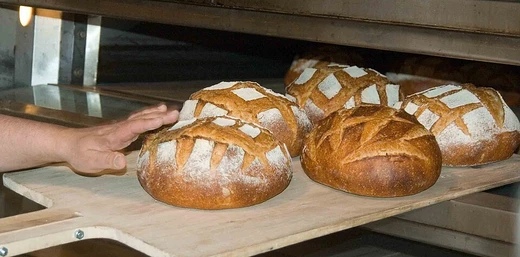
Gluten
Structural protein complex in grains, essential for dough elasticity.
Gluten is a structural protein complex naturally found in certain cereal grains, primarily wheat, barley, rye, and some oat cultivars. It is composed mainly of the proteins gliadin and glutenin, which form an elastic network when mixed with water and kneaded, giving dough its elasticity and ability to rise. Gluten is significant both as a key component in baking and as a trigger for various immune-mediated disorders.
- composition
- Gliadin and glutenin (wheat); hordeins (barley); secalins (rye); avenins (oats)
- protein_in_bread_wheat
- 75–85% of total protein
- key_property
- Viscoelastic and adhesive
- disorders_triggered
- Celiac disease, non-celiac gluten sensitivity, dermatitis herpetiformis, gluten ataxia
- prevalence_of_celiac_disease
- 1–2% of general population
- prevalence_of_NCGS
- 0.5–13% of general population
Lore & Background
Gluten forms when glutenin molecules cross-link via disulfide bonds, creating a submicroscopic network that traps carbon dioxide bubbles during fermentation, causing dough to rise. Baking coagulates the gluten, stabilizing the final shape. The chewiness of baked goods is proportional to gluten content; hard wheat flours have high gluten, while pastry flours have lower gluten. Kneading promotes gluten strand formation, and increased moisture enhances development, while shortening inhibits cross-links for tender products.
Reader's Guide
Gluten's significance extends from food to non-food industries. In baking, it provides elasticity and structure, with higher gluten content yielding chewier products like pizza and bagels. Industrially, gluten is extracted as a powder to improve dough volume and stability. It is also the basis for imitation meats (seitan) and is used as a stabilizing agent in ice cream, ketchup, and pet foods. However, gluten triggers adverse inflammatory, immunological, and autoimmune reactions in some people, including celiac disease (1–2% of the population) and non-celiac gluten sensitivity (0.5–13%). These disorders are treated by a gluten-free diet. Gluten peptides, especially gliadin, can cause intestinal damage, cell apoptosis, and immune activation. The incidence of gluten-related disorders has been increasing, possibly due to dietary westernization and increased wheat consumption.
Did You Know?
- Gluten makes up 75–85% of the total protein in bread wheat.
- Gluten is composed of gliadin and glutenin, which cross-link via disulfide bonds to form an elastic network.
- Gluten can trigger celiac disease in 1–2% of the general population and non-celiac gluten sensitivity in 0.5–13%.
- Gluten is used as a stabilizing agent in ice cream and ketchup, and as a protein source in pet foods.
More in Baking 25-27
Elsewhere in the Baking universe
Spotted an error? Know more?
This is a living reference — every entry is fact-audited, and reader corrections feed straight into our audit queue. Suggest an edit · See this site's audit record